
Before you sign anything
What a free quote doesn’t check
A free quote is a number written before anyone has looked properly at the house. Here are the nine things a proper site inspection finds first, and what each one turns into when it’s found halfway through the build instead.
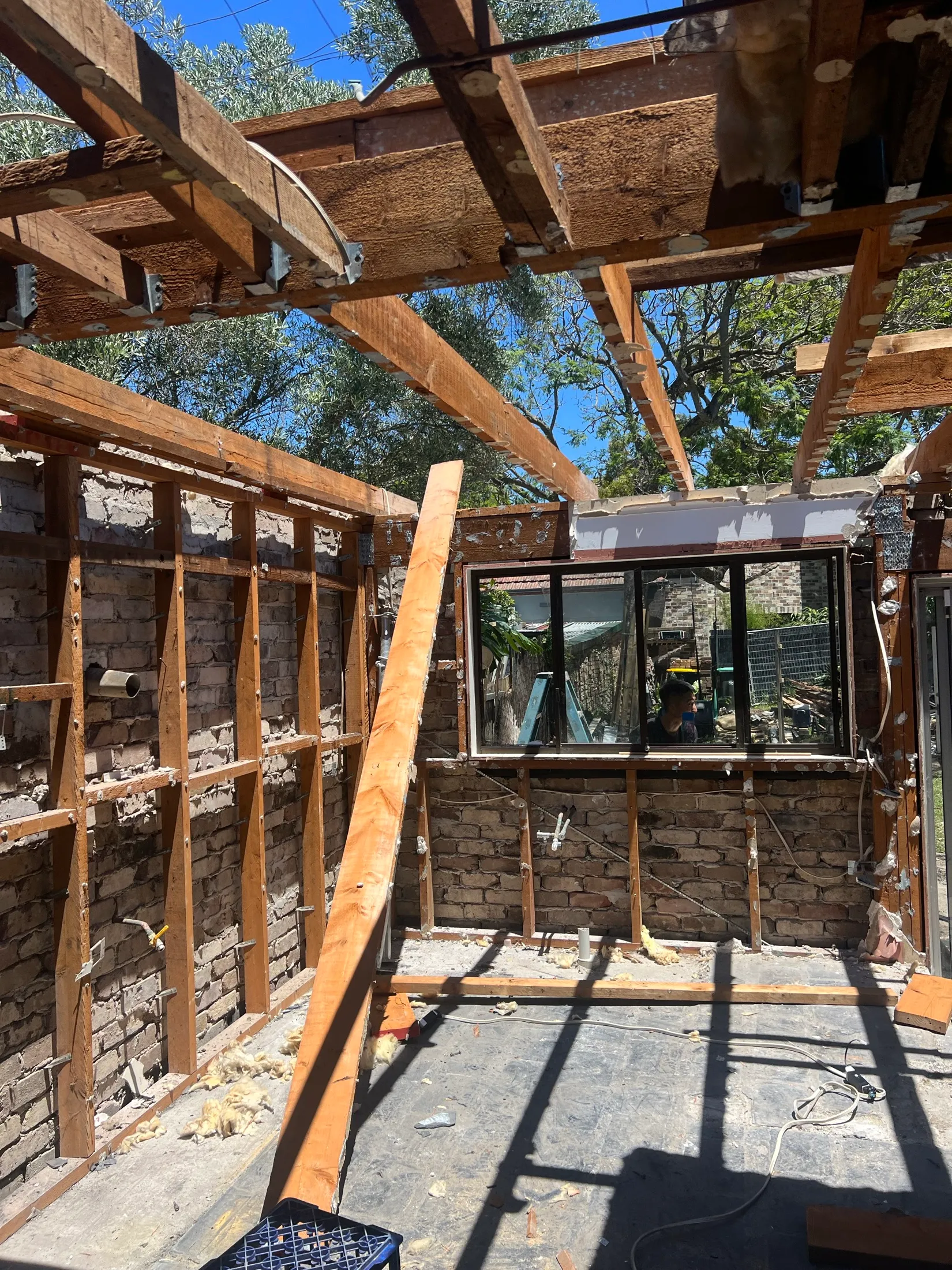
01
The ground
What the footings are sitting on, where the water goes when it rains, whether the old slab is level or even there. A free quote assumes standard footings.
Found mid-build: Piers, drainage and excavation turn up as a variation in the first fortnight, when you’ve already signed.
02
The structure you can’t see
Which walls are carrying load, what the lintels are, what the termites or the last renovation did to the frame. We open things up and look.
Found mid-build: A new steel beam, a propped opening and an engineer’s visit, mid-demolition, with the roof held up on acrows.
03
The old roof
Whether the new roof can tie into the old one, what the battens and tiles are like, where it has been leaking for years.
Found mid-build: Rot found when the ceiling comes down. A re-roof you didn’t budget for.
04
Services
Where the sewer, stormwater, gas and power actually run, not where the drawings say. Whether the switchboard can take the load.
Found mid-build: A sewer under the extension. A switchboard upgrade. Both found by the excavator.
05
Asbestos and lead
Any house built before the late 1980s is assumed to have it until tested. Eaves, bathrooms, the laundry, old paint.
Found mid-build: A licensed removal, a stop-work, a week lost, and everyone in masks.
06
Council and heritage
The overlays, the conservation area, the tree in the neighbour’s yard that the extension’s roof will overhang.
Found mid-build: A redesign after the price is agreed, or a condition of consent nobody priced.
07
The boundaries
Where the fence actually is, what’s built over it, what the neighbour will say about the wall you share.
Found mid-build: A survey, a dilapidation report and a conversation that goes better before the dig than during it.
08
The gap between the drawings and the number
Whether what’s drawn can be built for what you have in mind. Most designs are first priced after the drawings are finished.
Found mid-build: A redraw, a second round of approvals, months lost. The most common way a renovation stalls.
09
The materials and the air
What the paints, boards, sealants and insulation give off, and whether the house will have a ventilation plan once it’s sealed. A free quote prices “standard”.
Found mid-build: A new house that smells new for a year and condensation in the first winter. Nobody calls that a variation; the family just lives with it.
The point
Every one of these is cheaper on paper
None of the nine is unusual. Most Sydney renovations meet three or four of them. The only question is whether they’re found on paper, while you can still change the design and the budget, or found by the excavator, after you’ve signed.
That’s what the Clarity Process is for: two rounds of paid work, on the site and on the drawings, before any building contract. What it finds goes into a fixed price instead of a variation.
Start an enquiry
Want this checked on your house?
Tell us the suburb and what you want from the home. Todd replies within two working days with the Clarity Process in writing.
Or email todd@haikubuilding.com.au.